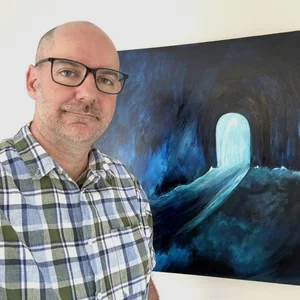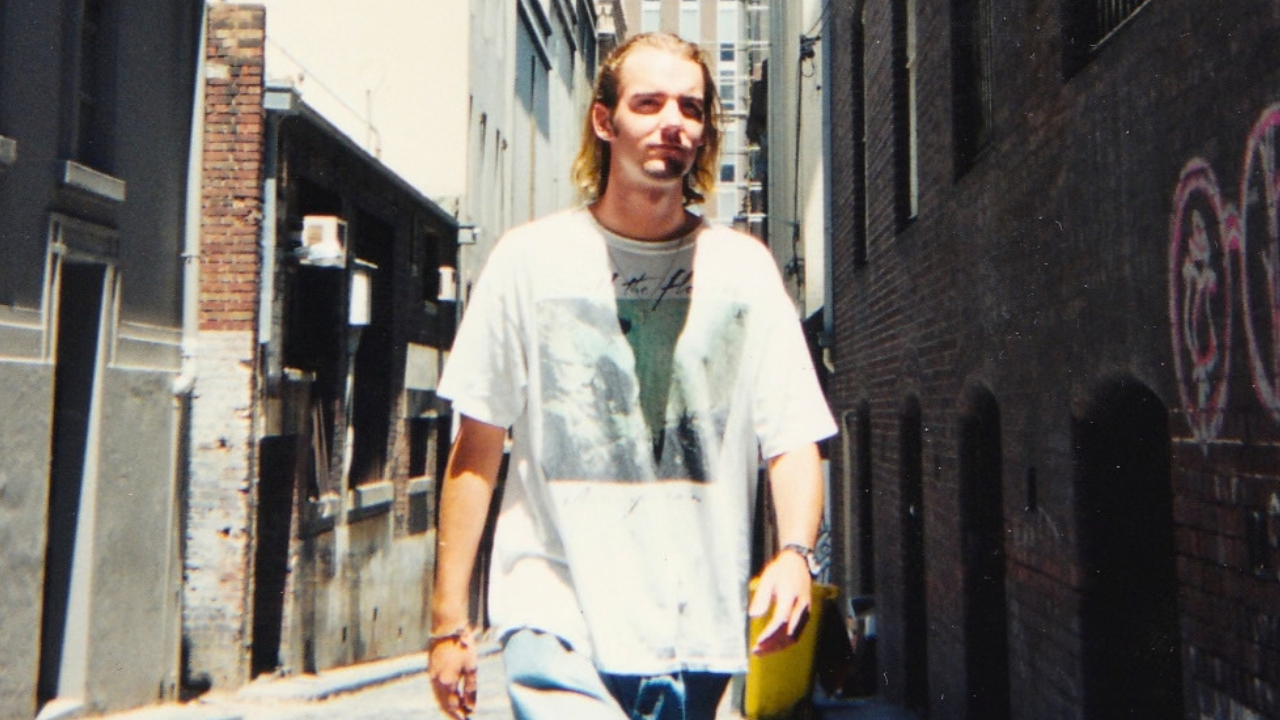
Me at 17, Melbourne
As I approach fifty, I’ve been taking time to put my life story into writing. Although I’ve reflected on my experiences for many years, both personally and through my work as a counsellor, bringing them together on paper has helped me recognise connections and recurring themes I hadn’t fully appreciated before. It has offered a fresh perspective on the deeper narrative running through my life.
Looking back, I’ve come to recognise that much of my life has been shaped by a search for home—not simply as a place to live, but as a deeper sense of identity, purpose and belonging. It has been a journey of gradually coming to understand who I am, who God is for me and what it means to be truly at home within myself.
I’m struck by how often the direction of my life was shaped by seemingly ordinary encounters, unexpected experiences and people who recognised something in me long before I could recognise it in myself.
My hope is that, in sharing something of my own story, others might recognise something of their own.
An Unexpected Beginning
At seventeen, following what had been the best year of my life so far, I saved enough money to travel to Australia for a holiday to visit my mother and brother. What I didn’t realise was that, by the time I returned to New Zealand, I would no longer have a home to return to.
Before I left, my father told me that he would be ending the lease and moving out of our unit. He planned to move in with his mother, who lived in a two-bedroom unit on the other side of the city.
But he hadn't explained where I would be living, and I struggled to understand what his plans meant for me. While visiting my mother in Queensland, I tried to make sense of the situation. Was I expected to leave school, find a job and start paying board? It didn't quite make sense given the circumstances, but it was the best explanation I could come up with at the time.
When my father collected me from the airport on my return to New Zealand, we drove in near silence to my grandmother’s unit. When we arrived, a camp stretcher had been set up for me in the lounge.
My friends, school, my part-time job and almost everything familiar to me were on the other side of town. At the time, all I wanted was to return to the life I'd had before leaving for Australia. After a couple of uncomfortable days, I phoned a friend and asked whether I could stay with his family. He spoke to his mother, who agreed to take me in.
I went into the kitchen and told my father that I’d arranged to move in with my friend.
He simply nodded.
I was relieved to be returning to my familiar world. It would be years before I fully appreciated the significance of what had happened—that I had been left homeless—or the generosity of the people who helped me through it.
Finding My Feet Before the Rug Was Pulled
Long before that holiday, change had been a familiar part of my childhood. I was born in New Zealand, moved to Australia when I was six, and experienced my parents’ separation the following year.
Home was generally a quiet place, but not necessarily one where I felt encouraged to express myself. There was little conversation about my thoughts, feelings or experiences, and I gradually learned to keep much of my inner world to myself. As a sensitive child, I learned to adapt to the expectations of those around me, often without those expectations being spoken aloud.
Looking back, I can see how little opportunity I had to develop a clear picture of myself through the eyes of people who knew me. Yet I wasn't consciously searching for recognition or wondering why nobody understood me. I didn't know what was missing.
By sixteen, I’d moved between countries several times and lived in thirteen different houses.
Yet the year leading up to my holiday to Australia was a particularly happy one. I was living with my father in Pakuranga, New Zealand, and had good friends, a car and a part-time job. I enjoyed the social side of school and was becoming more comfortable in my own skin.
An important part of that growing sense of stability was my newfound Christian faith. A couple of friends and I had become Christians and begun attending church. We felt comfortable there and even got baptised, although looking back, I realise we largely kept to ourselves rather than becoming part of the wider church community.
My favourite part of church was hearing people share their testimonies. There was something about hearing people's stories that fascinated me.
At that stage, my faith was largely expressed through the values I adopted and the way I sought to live my life.
Sometime during that year, I had one of my first experiences of someone recognising something in me that I hadn't yet recognised in myself.
A home economics teacher observed the way I interacted with children with special needs who joined our cooking classes. She noticed how naturally we connected, how comfortable they seemed in my company, and how well we worked together. Her encouragement stayed with me, even though I didn’t fully appreciate its significance at the time.
The Wandering Years
After securing a place to live with my friend's family at seventeen, I tried to continue with life as normally as possible. I was still attending school and working four evenings a week at a supermarket, earning around $67 a week. Of that, $50 went towards board, leaving me with very little money of my own.
I was already struggling to find much purpose in school, apart from the friendships I enjoyed there. With the added financial pressure and no other financial support available, I eventually decided to leave school and begin working full-time. It wasn't a carefully considered career decision. At the time, it simply seemed like the most practical way forward.
Not long after moving in with my friend's family, I gradually stopped attending church. It wasn't so much a conscious decision as something that simply faded into the background as the familiar structure of my life changed.
Around that time, I began my first significant romantic relationship with a girl who worked at the same supermarket. Although we'd attended the same school, I hadn't known her there. I later learned that she'd taken an interest in me and would sometimes make a point of walking down the soft-drink aisle where I worked as she finished her shift.
At a time when so much of my life was uncertain, the relationship became a meaningful part of my life and gave me a sense of belonging. For much of our time together, it was a relationship I genuinely valued and enjoyed.
However, over time, the relationship became increasingly difficult. We cared about each other, but we both carried unresolved childhood wounds, and neither of us really knew how to work through the difficulties that developed between us. I eventually reached a point where I felt unable to continue in the relationship, and at twenty-one, I made the difficult decision to end it.
Throughout those years, I'd had a growing sense that God was calling me back. At the time, I understood that as a call to return to church and reconnect with something of the meaning I'd experienced when I first became a Christian.
When I returned to church, I experienced what I understood to be a powerful encounter with God. My earlier experience of Christianity had largely provided a moral framework for living, but this experience made my faith real to me in a way it hadn't been before.
That experience brought a renewed sense of strength and clarity, although my circumstances remained difficult. My decision to end the relationship and return to church had social consequences that left me feeling quite alone. At the same time, I struggled to find a sense of belonging within the church community.
With so much of my life having changed, I began to feel that my time in New Zealand had come to an end. Later that year, I decided to have a fresh start and move to Queensland to live with my mother.
When I left, more than a dozen people came to the airport to see me off, including friends, my former girlfriend and members of my family. It was a striking contrast to how alone I'd felt in the months leading up to my departure.
An Oasis in the Wilderness
Moving to Queensland brought a welcome change. I was living with my mother again, enjoying the warmer climate, and had found office work as I began settling into a new life.
When my office job eventually came to an end, I began looking for new opportunities. I attended a vocational training course where something a facilitator said about working in aged care caught my attention. I hadn't previously considered that direction, but the following day I found myself with a job in the field.
One day at work, an elderly resident passed away. His wife, who had dementia, hadn't yet been told of his death but seemed to sense that something was wrong. This was my first experience of death in the workplace. While another staff member attended to the situation, I sat quietly with his wife.
With very few words between us, she eventually asked whether her husband was gone. I quietly told her that he was. She shed a tear, and we sat together in silence as she absorbed the news.
While I appreciated the significance of the moment for her, I didn't think there was anything particularly remarkable about the way I responded. Somehow, I just seemed to know that I didn't need to fill the silence or try to make things better. I simply needed to be there with her.
Working in aged care wasn't always easy, and some of the conditions were difficult. But I found that I connected naturally with many of the residents, and the experience helped me develop skills in caring for and supporting others.
Despite finding my feet in this work, my time in Queensland still felt unsettled. I remained uncertain about where my life was heading or where I belonged.
Yet amid that uncertainty, there was one experience that would stay with me.
Before I began working in aged care, an acquaintance of the family had suggested that I see a counsellor. I took their advice and made an appointment, not really knowing what to expect.
I remember sitting opposite a woman who simply asked what had brought me there.
Then she waited.
There was something about the way she looked at me. Her eyes seemed to communicate that she was present, interested and ready to receive whatever I wanted to say.
I hadn’t really known what I was going to talk about. But in that moment, something opened. I spent the next two hours telling her my life story.
For much of my childhood, I’d had little opportunity to express my own reality. My story had been inside me all along, but I hadn't fully recognised what was there. In that counselling room, it was as though a light had finally been switched on.
Finding Purpose
In late 2000, I packed everything I owned into my VB Commodore and drove to Melbourne. I’d visited my brother and his partner a few months earlier, and they’d invited me to stay with them while I got established. Having struggled to build meaningful friendships in Queensland, I welcomed the opportunity for a new start.
My brother’s partner introduced me to a church, which I began attending. Around this time, I also started working in disability support, a role I enjoyed as I became increasingly drawn towards the helping professions.
In my disability support work, I helped a client who had acquired a brain injury following a car accident. I found myself naturally recognising ways to help the client relearn skills and develop greater independence. A neuropsychologist noticed the work I was doing and encouraged me to consider studying psychology. Once again, someone had recognised an ability in me that I hadn’t fully appreciated myself.
During this same period, although I was finding satisfaction in my work and beginning to recognise some of my abilities, I was still struggling to make sense of my own life. I was trying to be a good person and do the right things, yet I started to sense that something wasn’t right. Remembering my earlier experience of counselling in Queensland, I decided to seek counselling again.
The church I’d been attending had its own counselling centre. In 2001, I began seeing a counsellor there named Geoff, whom I continued seeing over the next couple of years. Much of our work involved exploring my family background, the experiences that had shaped me, and my developing understanding of who I was.
When the disability support program eventually lost its funding, I returned to aged care, this time obtaining a Certificate III in Aged Care Services. I continued to enjoy working with people as I considered what direction my life might take.
During a counselling session with Geoff, I mentioned that I'd been considering studying nursing as a way of moving forward, although it wasn't something I particularly wanted to do.
He asked me what I would actually like to do.
Without really knowing what I was going to say, I heard myself respond:
“I think I'd make a good counsellor.”
He looked at me and replied:
“I think you would as well. I've been waiting for you to realise that.”
Although I hadn’t anticipated saying those words, they felt entirely natural, as though I’d given expression to something that had been there all along. My outward response was relatively simple. I think I nodded and asked what I should do next.
Once I'd given voice to the possibility of becoming a counsellor, I began looking back over my life through a different lens. The encouragement I'd received from people like my home economics teacher and the neuropsychologist, my experiences working with vulnerable people, and the abilities emerging through my own counselling journey began to make sense as parts of a direction I hadn't previously recognised.
After many wandering years, I had a direction.
And I began walking in it.
Finding Belonging
In 2004, I began studying counselling. Those years became an important period of personal and professional development. Counselling gave me a language for understanding myself, my relationships and the world around me, while the course itself provided an intellectual environment that felt almost tailor-made for me.
I developed friendships, discovered academic abilities I hadn’t fully recognised, and generally felt comfortable and accepted among my fellow students. Although I maintained a degree of autonomy in my thinking and perspective, I knew I’d found a field of study where I belonged.
During my final year, I began gaining practical counselling experience at the same counselling centre where I’d first received counselling from Geoff. I completed my studies in late 2008 and graduated in early 2009. By then, I was looking for opportunities to develop further as a counsellor.
I decided to approach pastors, counsellors and ministry leaders across Melbourne's eastern suburbs to explore where I might contribute. When I mentioned the idea to my counselling supervisor, he encouraged me to pursue it, suggesting that through the process I would discover where I belonged.
Over the next three months, I met with more than sixty people.
Near the end of my search, one of those meetings brought me to a church where I spoke with a pastor who mentioned the possibility of becoming involved in new counselling work being developed there.
I later learned that the church’s counselling centre was being taken over by an organisation headed by my counselling supervisor. At our next supervision session, I told him how my search had brought me to that very church.
After listening to my account of the journey that had brought me there, he simply responded:
“I would like to invite you to join the team.”
After months of searching and meeting with more than sixty people, I’d arrived at an opportunity connected to the very person who’d first encouraged me to undertake that search.
I would spend the next six years at this organisation. Those years became an important part of my professional development. I was doing work I loved, growing in confidence and experience, and increasingly living out what I believed God had called me to do.
Reaching the Point of No Return
While I was finding my place professionally, my relationship with institutional church had gradually been changing. Although church had played an important role in my Christian journey, I was finding that many of my most meaningful spiritual experiences were happening outside its formal gatherings and activities. Often, it was through personal conversations and relationships with people I met along the way that I experienced the greatest sense of spiritual growth and connection with God.
Eventually, I came to believe that God was calling me to continue my journey with Him outside institutional church. It was a painful and unsettling transition, particularly because church had been such a significant part of my life. Yet, over time, I began to appreciate that what initially felt like a difficult departure was opening the way for something beneficial. Rather than diminishing my faith, it brought a growing sense of freedom and a deeper, more personal connection with God.
Around this time, while reading the early chapters of Ephesians with some older spiritual friends, something I'd understood intellectually for many years became much more real to me. I experienced a deeper revelation of God's love and His desire for relationship with me. This strengthened my faith and gave me a growing confidence in who I was and how I related to others.
Somewhat paradoxically, as my confidence grew, some of the very friendships that had helped nurture that growth began to change. These were older men who had played important roles in supporting me along my journey. Over time, I no longer needed those relationships to function in quite the same way. I hoped they might develop into more mutual friendships, but I sensed that my growing autonomy was creating discomfort. By the middle of 2012, those friendships had faded, bringing further changes to my personal life.
Around this period, I had an unexpected dream in which I was reunited with the woman I'd met at the supermarket when I was eighteen, someone I'd loved deeply in my youth. I'd scarcely thought about her for years and believed that chapter of my life was well and truly behind me.
But the dream stirred feelings that took me completely by surprise. Although I'd moved on with my life, I realised that my heart was still unconsciously attached to the memory of having once felt deeply loved.
After carrying those feelings for some time, I remember sitting in my lounge and recognising what it would take to be free. My heart needed to let go of its attachment to the memory of being loved, even if it meant accepting that I might never experience that kind of love again. It was difficult to face, but when my heart finally became willing to accept it, something shifted. The change was subtle but profound, as though my heart had finally caught up with what my mind had understood for years.
During the period leading up to that moment of release, I had also experienced the loss of two significant figures in my life. Geoff, the counsellor who had helped me recognise my calling to counselling, died in December 2013. Roy, who had helped me navigate my journey with God outside institutional church, died in March 2014. Both men had played important roles in my personal and spiritual development, and their deaths were deeply felt.
By mid-2014, much of the personal world I’d spent years building had fallen away.
I still loved my counselling work, but with so much of my personal life having changed, I began to wonder whether this was all there would be—counselling during the day and returning home alone. I couldn't see how anything might change.
During this time, an image formed in my mind.
As I reflected on my life, I pictured myself standing partway across a bridge. Behind me, the bridge was intact. Ahead of me, it was broken.
I’d travelled too far to go back, but I couldn’t see how to continue forward.
What I remember most about that image wasn’t panic or despair. It was a quiet surrender—a recognition that I’d reached the limits of what I could do to change my circumstances.
Strangely, that surrender brought a sense of freedom and peace.
The Broken Bridge Restored
Then, on Valentine’s Day weekend in February 2015, something unexpected happened.
Several months earlier, following a conversation with a therapist, I’d set up an online dating profile on eHarmony. After a few unusual exchanges, I’d lost interest and largely forgotten about it.
A notification arrived. Someone had reached out to me through the site.
Her name was Kate.
We began corresponding, and something about our conversations felt different. As we got to know one another, we discovered that despite our different histories, there were some remarkable similarities in our journeys.
One of those similarities was our relationship with church. We'd both spent years trying to find our place within church communities, only to find ourselves outside the very system we'd once tried to belong to. But our connection went beyond those shared experiences. There was a natural affinity between us, a sense that we were kindred spirits.
In March, during one of our early visits together, I took Kate to Warburton to show her the area where I'd spent part of my childhood.
As we explored the area, I showed her our former family home, where I'd been living when my parents separated. Nearby was a bridge where my brother and I had played as children.
Kate and I walked out onto the bridge together. Standing there, she turned to me and said:
“I’d like to give you a kiss.”
And there, beside my childhood home, we shared our first kiss.
Kate knew nothing of the broken-bridge image I’d carried with me. Not long before, I’d pictured myself standing on a broken bridge, unable to see a way forward. Now, beside a home associated with a painful turning point in my childhood, I was standing on another bridge, this time with someone beside me.
I couldn’t escape the feeling that something in my life was beginning to be restored.
Building a Life Together
After meeting Kate in early 2015, our relationship continued to grow. Over time, we began imagining what a future together might look like, including where we would live and how I could continue my counselling work.
In 2013, I’d started creating videos on YouTube as something of a side project, exploring ideas and sharing insights that I hoped might be helpful to others. What had begun simply as an addition to my counselling work had been quietly growing in the background. As Kate and I considered our future, I began to realise that the channel might also provide a foundation for building an online counselling practice.
After many conversations, in February 2016, we decided that I would leave Melbourne and move to the small town in regional Victoria where Kate lived. We married that July, beginning a new chapter of our lives together. I transitioned my counselling practice online, allowing me to continue the work I loved while living in the country.
Around the time we married, Kate began offering me a gentle piece of advice that she would repeat occasionally over the years that followed:
“Time to put the brakes on.”
At the time, I didn't really understand what she meant, nor did I stop to ask. I was excited about our future and eager to bring our plans to life.
Together, we developed gardens, planted fruit trees, kept chickens and gradually worked towards a more self-sufficient way of life. In time, we welcomed our son.
There was always something to develop, improve, build or create. I took genuine pleasure in these pursuits and in building a life that reflected our shared hopes and values.
It would take me several more years to fully appreciate the wisdom in Kate’s advice.
Time to Put the Brakes On
Yet alongside the ordinary demands of work and family life, there were difficult circumstances to navigate and periods of considerable pressure.
I’d also spent much of my adult life moving from one responsibility or opportunity to the next, rarely allowing myself an extended period of rest. Over time, however, the accumulated demands were catching up with me. I’d become so accustomed to pressing on through difficulties that I hadn’t fully recognised just how exhausted I was becoming.
By early 2024, I knew I needed a break.
I decided to take a sabbatical from counselling, beginning in July that year. My intention was to step away for a while, recover my energy, and potter in the garden.
For the first time in many years, I wasn’t organising my days around counselling appointments.
There was room to slow down, spend time with my family, and enjoy our home.
And perhaps most importantly, there was finally room to look after myself.
As the months passed, I began to appreciate just how exhausted I’d become, and how much I needed this time to recover.
When the first year of my sabbatical drew to a close, I recognised that I wasn’t yet ready to return to counselling.
So I made a decision that would once have been difficult for me.
I gave myself another year.
A Sort of Homecoming
During my second year away from counselling, I gradually began to recognise a deeper need for rest and recovery—something that went beyond the exhaustion that had initially led me to take a break.
For much of my adult life, I'd been aware that my childhood experiences had left a lasting impression on me. Through years of personal reflection and my work as a counsellor, I'd come to recognise something of the orphaned child within me—a boy who, despite having a family, had struggled to experience a secure sense of belonging.
What I hadn't fully appreciated was how the experience of becoming homeless at seventeen had reinforced that underlying insecurity. At the time, I hadn't even recognised what had happened to me as homelessness. In some ways, it had simply been a continuation of the instability and abandonment I'd already experienced growing up.
Over the years, as I began to understand the significance of what had happened, I also came to recognise a longstanding fear of homelessness beneath much of my anxiety. No matter how secure my circumstances became, there was something within me that feared it could all suddenly disappear.
That fear had quietly influenced the way I lived, contributing to my tendency to keep working, persevering and adapting, often without allowing myself adequate rest. Even when I took annual leave, I frequently struggled to relax. And although much of what I was doing brought me genuine satisfaction, I began to recognise how this underlying anxiety had also contributed to my eventual exhaustion.
These weren't entirely new insights. But during my second year away from counselling, I finally had the time and space to respond differently to the needs of that younger part of myself.
Understanding something about yourself and learning to live differently are not always the same thing.
Kate and I had built a home and created a life where we could raise our son, establishing much of the security and stability I'd missed as a child. Yet despite having helped create a secure home for my family, I was still learning to experience that same sense of security and rest within myself.
The orphaned child within me was beginning to experience a sort of homecoming—not simply because I'd created a place to call home, but because I was learning to offer him the care, security and rest he'd needed for so long.
Living Wholeheartedly
As I approach fifty, I find myself entering another chapter of life.
After nearly two years away from counselling, I’ve returned to the work I love, but with a different understanding of how I want that work to fit into my life.
My calling to help others hasn’t disappeared. Neither has my enthusiasm for exploring ideas, writing, creating and sharing what I’ve learned. If anything, the time away has helped me appreciate how important these different interests and pursuits are to me, alongside having the time and energy to be more present with my family.
In my counselling work, I've often found that by slowing down the process, more can be achieved within a session. It's a paradox I've long valued in my work, but one I'm learning to apply more deliberately to my life as a whole. Rather than continually moving towards the next thing, I want to give myself the time and space to be more present in what I'm doing.
Writing is becoming an important foundation for my creative work, giving ideas the time and space to develop without rushing them. This testimony itself has emerged from that slower, more thoughtful approach, and choosing to share it feels like a meaningful step towards bringing my faith, counselling experience and personal journey together more openly in my creative work.
There have been times when I’ve wondered whether the best years of my life were already behind me. Discovering counselling and later building a practice that reached people around the world were significant seasons in my life. But perhaps those weren’t the high points of my story. Perhaps there are still seasons ahead that I can scarcely imagine.
I'm willing to put my hand up for whatever God might have in store—not because I have something to prove, but because I want to live wholeheartedly.
Looking back across my life, I can see a deeper thread running through it all that continues to astonish me: that despite the setbacks and challenges, God has continued introducing Himself to me within the circumstances of my life, allowing that connection to quietly grow. And as a result, my relationship with myself has continued to deepen and unfold. My journey has given me a deeper appreciation of what Paul wrote in Romans 8:28—that God works all things together for good for those who love Him.
That understanding gives me a growing confidence that I'm in good hands. I'm also grateful for the many people whose kindness, encouragement and willingness to recognise something in me helped shape the direction of my life.
When I think back to that seventeen-year-old boy who returned from a holiday to discover he no longer had a home, I realise how little he could have imagined of the life that lay ahead. The people who would come alongside him, the work he would discover, the home and family he would one day have, and the ways his understanding of himself and God would deepen along the way.
I don't know exactly what the years ahead will hold. But I've come to understand homecoming as something more than arriving at a particular destination. It's an ongoing journey of growing closer to God and becoming more fully myself.
And I'm confident that, whatever lies ahead, it will include a sort of homecoming as God continues to call me home.
What does being truly at home mean to you—beyond having a place to live? I’d be interested to hear your thoughts in the comments.
Click to watch the supporting video on this topic
I’m Scott Morgan, a counsellor and certified MBTI® practitioner. I offer online counselling for individuals and couples, including INFJs wanting to explore identity, relationships, purpose, life direction and personal growth. You can learn more about my counselling services or make an enquiry.
Continue exploring INFJ self-understanding
You may also enjoy INFJ Purpose: Turning Your Inner Vision Into Reality — an exploration of how INFJs can move from inner awareness and vision into more grounded action in the world.
If you found this article helpful, continue with Restoring the INFJ Heart, which explores the process of reconnecting with parts of yourself that may have been overlooked or pushed aside.